
 Русский

Stepper Motors: The Complete Engineering Guide for Automation (2026)
Stepper motors remain the cornerstone of precise, repeatable motion in industrial automation, robotics, medical devices, packaging machinery, and lab instrumentation. Unlike continuous-rotation motors, stepper motors move in discrete angular increments — or 'steps' — enabling accurate open-loop positioning without feedback sensors. In 2026, as Industry 4.0 demands tighter tolerances, higher reliability, and smarter integration, understanding stepper motor fundamentals is no longer optional for design engineers — it’s essential.
What Is a Stepper Motor?
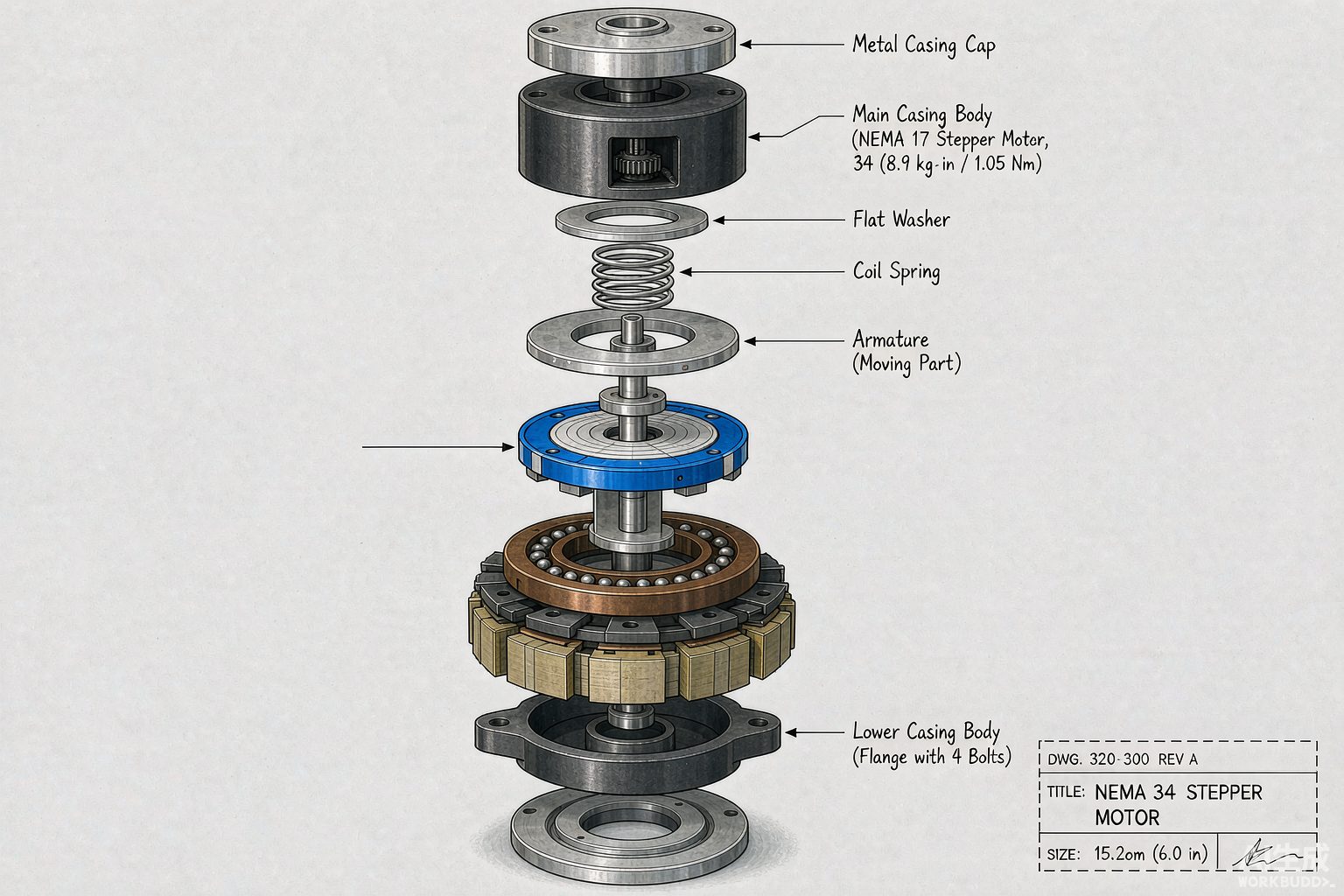
A stepper motor is an electromechanical actuator that converts electrical pulses into proportional mechanical rotation. Each pulse energizes specific stator windings, causing the rotor to align with the resulting magnetic field — advancing one step. Because motion is digitally commanded, position and speed are inherently controllable via pulse frequency and count.
Key advantages include:
- No feedback required for basic positioning (open-loop simplicity)
- High holding torque at standstill
- Excellent low-speed torque and repeatability
- Inherently digital interface — ideal for microcontroller-based systems
- Robustness and long service life with minimal maintenance
For a broad technical overview, see our Stepper Motors guide, which introduces core architecture, winding configurations, and application context.
How Stepper Motors Work: Electromagnetism in Motion
At its core, a stepper motor consists of a multi-pole permanent magnet (or variable-reluctance) rotor and a stator with multiple independent electromagnetic coils. When current flows through a coil set, it generates a magnetic field that attracts or repels the rotor, rotating it by a fixed angle — the step angle.
Common step angles include 1.8° (200 steps/rev), 0.9° (400 steps/rev), and fractional microsteps enabled by advanced drivers. Microstepping subdivides each full step into smaller increments (e.g., 1/16, 1/32, or even 1/256), dramatically smoothing motion and reducing resonance — though it does not increase absolute positional accuracy without feedback.
For deeper insight, read our article on Step Angle, Microstepping & Positioning Resolution Explained.
Open-Loop vs Closed-Loop: Choosing the Right Control Architecture
The biggest strategic decision in stepper motor system design is choosing between open-loop and closed-loop control.
Open-Loop Stepper Systems
In open-loop operation, the controller sends pulses to the driver, assuming each pulse results in one corresponding step. There is no position verification — making it simple, cost-effective, and highly reliable under predictable loads. However, if the motor stalls (due to overload, acceleration too high, or resonance), the system loses synchronization and position error accumulates.
HDB offers high-performance open-loop options including Two-Phase Open-Loop Stepper Motors and Three-Phase Open-Loop Stepper Motors, optimized for smooth torque delivery and thermal stability across duty cycles.
Closed-Loop Stepper Systems
Closed-loop steppers integrate encoder feedback (typically incremental or Hall-effect) to monitor actual rotor position and dynamically adjust current — eliminating missed steps, improving efficiency, and delivering servo-like responsiveness while retaining stepper simplicity. They offer higher torque utilization, better acceleration, and automatic stall detection.
HDB’s Two-Phase Closed-Loop Motors combine integrated encoders, intelligent drivers, and adaptive current control — ideal for applications where reliability under variable load is non-negotiable.
Compare trade-offs in depth with our dedicated resource: Open-Loop vs Closed-Loop Stepper Motors: Which Should You Choose?
NEMA Frame Sizes: Standardization Meets Application Needs
NEMA (National Electrical Manufacturers Association) frame sizes standardize mounting dimensions, shaft diameters, and faceplate bolt patterns — ensuring mechanical interchangeability across manufacturers. Common sizes include:
- NEMA 17: Compact; widely used in 3D printers, small actuators, and lab automation
- NEMA 23: Balanced torque and size; common in CNC routers, pick-and-place systems
- NEMA 34: High-torque; suited for heavy-duty indexing tables and industrial conveyors
- NEMA 42: Maximum power density; found in large rotary tables and precision machine tools
HDB provides NEMA-compliant motors across all major sizes — including specialized variants like Two-Phase Brake Stepper Motors for vertical-axis safety hold, and Two-Phase Waterproof Stepper Motors rated IP65/IP67 for washdown or outdoor environments.
Torque Metrics: Holding, Pull-out, and Dynamic Performance
Torque defines what a stepper motor can *do* — but not all torque is equal. Engineers must distinguish between:
- Holding Torque: Maximum torque the motor can exert while stationary and fully energized (key for static positioning integrity).
- Pull-out Torque: Maximum torque the motor can deliver at a given speed before losing synchronism (critical for dynamic load handling).
- Pull-in Torque: Maximum torque at which the motor can start/stop instantly without losing steps (important for frequent start-stop cycles).
Torque drops significantly with increasing speed — a behavior captured in the torque-speed curve. Understanding this curve prevents undersizing and ensures stable operation across your target RPM range.
Learn how to interpret these curves with our practical guide: How to Read a Stepper Motor Torque Curve (Holding vs Pull-out Torque).
Stepper Drivers: The Intelligence Behind the Motion
A stepper driver translates logic-level step/direction signals into high-current waveforms that energize motor windings. Its capabilities directly affect performance: microstepping resolution, current regulation, decay mode (fast/slow), thermal management, and communication protocols (UART, CAN, Modbus, or STEP/DIR).
HDB’s Stepper Drivers are engineered for seamless compatibility with our motor families — supporting bipolar and unipolar configurations, adaptive current control, and configurable acceleration profiles. Many models integrate protection features (overcurrent, overtemperature, short-circuit) and support both standalone and networked operation.
HDB’s Precision Stepper Portfolio: Engineered for Real-World Demands
As a specialist in precision motion control, HDB delivers stepper solutions purpose-built for demanding industrial applications — not just catalog parts. Our portfolio includes:
- Hollow Shaft Stepper Motors: Enable through-shaft cabling, sensor integration, or concentric mechanical coupling — ideal for collaborative robots and modular rotary stages (Hollow Shaft Stepper Motors).
- Integrated Pulse Stepper Motors: Combine motor, driver, and controller in one compact unit — reducing wiring, EMI, and commissioning time (Integrated Pulse Stepper Motor).
- Linear / Lead Screw Stepper Motors: Convert rotary motion to precise linear displacement — eliminating external mechanics for compact Z-axis or micro-positioning (Linear / Lead Screw Stepper Motor).
- Bipolar Stepper Motors: Maximize torque per amp with full-winding excitation — preferred for high-efficiency, high-dynamic applications (Bipolar Stepper Motor).
Every HDB stepper motor undergoes rigorous testing for thermal stability, torque consistency, and electrical noise immunity — because reliability isn’t a feature; it’s foundational.
Explore the full breadth of motion solutions in all HDB motor products.
Frequently Asked Questions
Can I upgrade from open-loop to closed-loop without changing my motor?
Yes — many HDB open-loop motors (e.g., NEMA 23 and 34 two-phase models) are mechanically and electrically compatible with our closed-loop kits. However, optimal performance requires matching the motor’s back-EMF and inductance profile with the closed-loop driver’s tuning parameters. We recommend consulting HDB application engineering for retrofit guidance.
What’s the difference between unipolar and bipolar stepper motors?
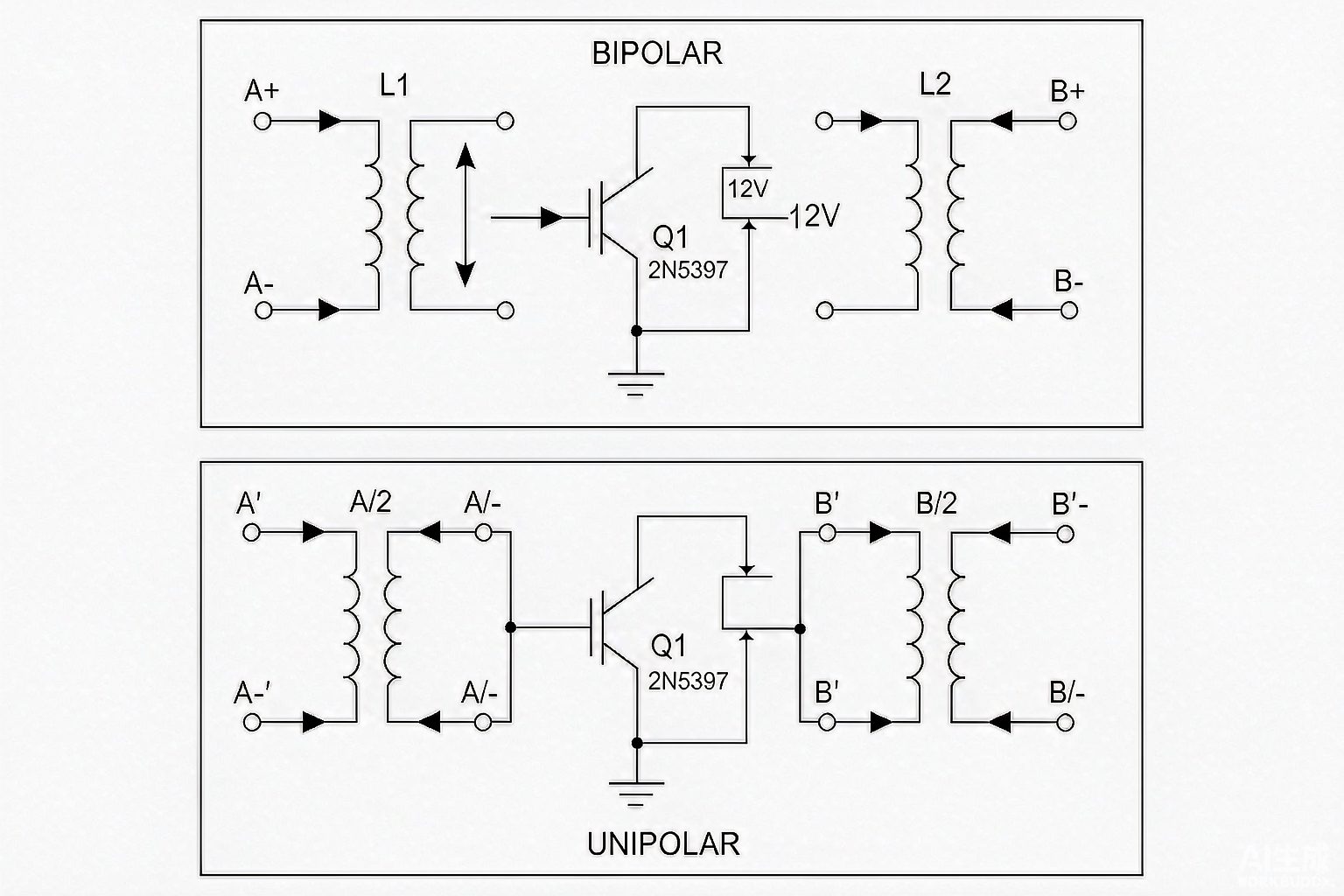
Unipolar motors have center-tapped windings, allowing simpler (but less efficient) drive circuitry. Bipolar motors use full-winding excitation — delivering up to 40% more torque for the same current and are now standard in high-performance designs. All modern HDB stepper motors are bipolar-configured unless specified otherwise.
Do I need a gearbox with my stepper motor?
Not always — but gearboxes multiply torque and reduce speed, improving inertia matching and reducing resonance. HDB offers precision planetary and harmonic gearheads designed specifically for stepper integration. For high-hold-torque applications requiring ultra-fine positioning, consider our Two-Phase Brake Stepper Motor instead of adding mechanical braking.
Conclusion
Stepper motors continue to evolve — not by replacing core principles, but by enhancing them: smarter control, tighter tolerances, broader environmental resilience, and deeper system integration. Whether you’re selecting a NEMA 17 for a desktop analyzer or specifying a closed-loop NEMA 42 for a semiconductor handling platform, the right choice balances physics, application constraints, and long-term reliability.
HDB Motor designs every stepper motor — from waterproof variants to integrated pulse units — with engineering rigor and application-first thinking. Contact HDB Motor today to discuss your motion challenge — and let precision begin at the first step.