
 Русский
Understanding the Relationship Between Motor Torque and Current: 5 Key Facts
The relationship between motor torque and current is fundamental to understanding how electric motors perform, especially stepper motors. Whether you're designing motor control systems or troubleshooting performance issues, grasping this connection is crucial. In this article, we’ll explore the primary principles, dynamic factors, and practical considerations that define how torque and current interact.
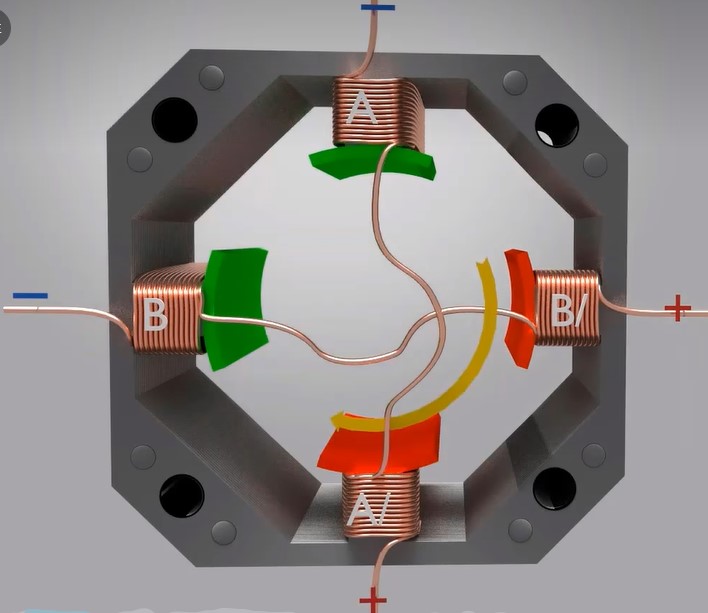
What Is the Relationship Between Motor Torque and Current?
At its core, the relationship between motor torque and current is generally linear in static or holding conditions. The holding torque T can be calculated using the straightforward formula:
T = Kt × I
Where:
- T = motor torque (Nm or oz-in)
- Kt = torque constant (Nm/A or oz-in/A), provided by the manufacturer
- I = current through the motor winding (A)
This means that when the motor is stationary and holding position, torque is directly proportional to the current supplied. Most modern stepper motor drivers operate in constant current mode, making this formula highly applicable in practical scenarios.
How Does Dynamic Operation Affect the Torque-Current Relationship?
When the motor is running dynamically (e.g., accelerating or at high rotational speeds), the relationship between motor torque and current becomes more complex. Several factors come into play:
Inductive Effects: The motor’s coils have inductance, meaning current does not instantly rise to the desired level. At high stepping frequencies, this causes current lag and torque reduction.
Back-EMF: As the motor spins, it generates a voltage opposing the supply (back electromotive force), effectively reducing the current and thus torque.
Drive Method: Constant current drives maintain torque predictability, while constant voltage drives rely on voltage and resistance, affecting current and torque differently.
An approximate dynamic torque calculation considers phase resistance R, voltage V, and stepping frequency f, but precise modeling often requires simulation tools or manufacturer data.
Key Parameters Influencing the Relationship Between Motor Torque and Current
Several motor-specific parameters affect this relationship:
Torque Constant (K_t): A design-specific value that links current to torque. It often equals the back-EMF constant (K_e) but may have different units.
Current (I): Directly impacts torque but must be kept within thermal limits to avoid overheating.
Drive Voltage (V): Higher voltages help current reach set values faster, improving dynamic torque at high speeds.
Practical Considerations in Motor Control
1. Drive Modes
Constant Current Drive: Provides stable torque via controlled current (I), following (T = K_t × I).
Constant Voltage Drive: Current is determined by voltage and winding resistance (I = V/R), making torque proportional to (V/R).
2. Microstepping
Microstepping adjusts current amplitude and phase to smooth motor motion, which can slightly reduce peak torque but improve precision.
3. Thermal Management
Excessive current causes winding heating, potentially damaging the motor. Operating within manufacturer-specified current and temperature limits preserves motor life and performance.
Summary: Mastering the Relationship Between Motor Torque and Current
To recap:
Static Torque: Linearly proportional to current via (T = K_t × I).
Dynamic Torque: Influenced by inductance, back-EMF, drive method, and stepping frequency.
Motor Parameters: Torque constant, current, and voltage significantly affect torque output.
Practical Use: Constant current drives simplify torque control; thermal limits must be respected.
For detailed motor characteristics and performance curves, always consult the motor datasheet. Advanced applications—such as high-speed or high-precision motion—benefit from comprehensive modeling that incorporates electrical and mechanical dynamics.
Recommended Articles:
Stepper Motor Step Angle and Calculation Formula: Complete Guide (2025)
Difference Between Sinking Current and Sourcing Current: 7 Powerful Facts
Motor Torque Calculation Formula: Simple Guide with 5 Key Torque Formulas