
 Русский
Difference Between Sinking Current and Sourcing Current
The difference between sinking current and sourcing current is a fundamental concept in digital electronics and control system design. Understanding this difference is helps engineers correctly design microcontroller I/O, PLC outputs, sensor interfaces, and motor control circuits.
Incorrect use of sinking or sourcing outputs can lead to unstable logic levels, damaged I/O pins, or unreliable system operation. This article explains the difference between sinking current and sourcing current from current flow direction, logic state behavior, output drive capability, and real-world application scenarios.
What Is Sinking Current?
Difference Between Sinking Current and Sourcing Current in Low-Level Output
Sinking current occurs when a digital output is driven to a low logic level, and current flows from the external load into the output pin of the device. In this mode, the output port acts as a current sink.
A typical example is an MCU driving an LED:
The LED is connected to VCC through a current-limiting resistor
The MCU I/O pin outputs LOW
Current flows from VCC → LED → I/O pin → ground
In this configuration, the MCU is sinking current.
Key Characteristics of Sinking Current
Output logic state: LOW
Current direction: Load → Output pin
Higher current capability compared to sourcing
Widely used in PLCs and industrial I/O modules
Because many chips can sink more current than they can source, sinking current outputs are often preferred for driving LEDs, relays, optocouplers, and motor control inputs.
What Is Sourcing Current?
Difference Between Sinking Current and Sourcing Current in High-Level Output
Sourcing current occurs when a digital output is driven to a high logic level, and current flows from the output pin to the external load. In this case, the output port acts as a current source.
Example scenario:
The I/O pin outputs HIGH
The load is connected between the pin and ground
Current flows from the I/O pin → load → ground
Here, the device is sourcing current.
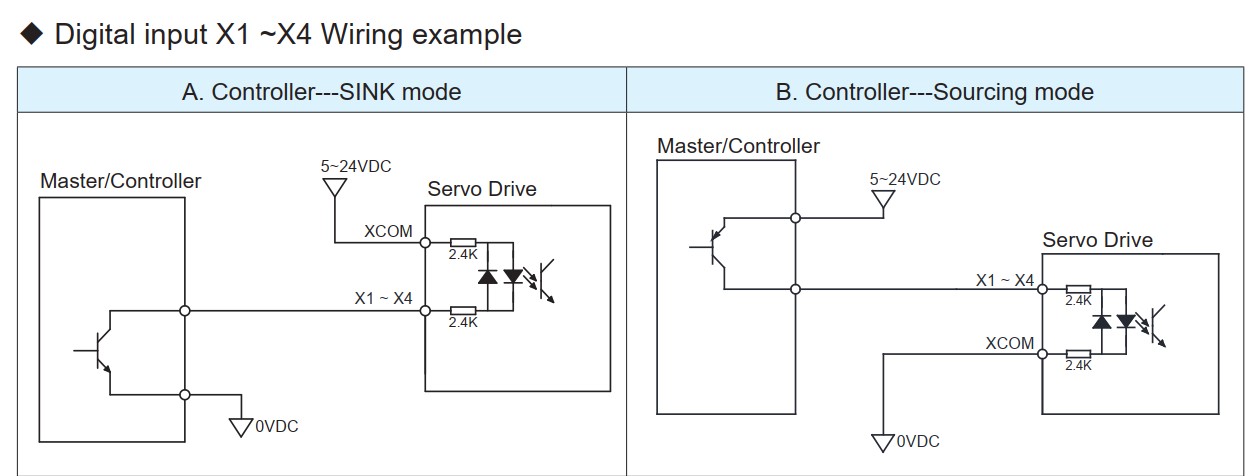
Schematic Diagram of Current Direction for Sourcing and Sinking Current
Key Characteristics of Sourcing Current
Output logic state: HIGH
Current direction: Output pin → Load
Lower maximum output current capability
More sensitive to voltage drop under load
Difference Between Sinking Current and Sourcing Current in Output Drive Capability
Sinking Current and Low-Level Voltage Rise
As sinking current increases, the internal transistor inside the chip experiences a higher voltage drop. This causes the output low-level voltage (VOL) to rise.
Designers must ensure that VOL remains below the logic low threshold. For example, TTL logic typically requires VOL ≤ 0.5V to avoid logic errors.
Sourcing Current and High-Level Voltage Drop
As sourcing current increases, internal resistance causes the output high-level voltage (VOH) to decrease.
VOH must remain above the minimum logic high threshold. TTL systems typically require VOH ≥ 2.4V for reliable operation.
Typical Application Scenarios
Difference Between Sinking Current and Sourcing Current in Real Circuits
Typical Applications of Sinking Current
LED indicator circuits
PLC digital outputs
Relay and solenoid drivers
Motor control input signals
Industrial automation equipment
Sinking outputs are widely used in industrial environments due to their stronger load-driving capability and higher tolerance to electrical noise.
Typical Applications of Sourcing Current
Logic signal transmission
High-impedance sensor interfaces
Reference voltage outputs
Because sourcing current capability is often limited (typically less than 5 mA), it is not recommended for driving high-current loads directly.
Difference Between Sinking Current and Sourcing Current in Datasheets
Datasheet values for sinking and sourcing current represent the maximum allowable output current under defined conditions. These values are absolute limits, not recommended continuous operating currents.
Designers should always apply safety margins and consider the total current across all I/O pins.
For additional technical reference, see this application note from Texas Instruments: Understanding Digital Output Drive Capability
Practical Design Recommendations
Prefer sinking outputs for LEDs, relays, and motor driver inputs
Verify VOL and VOH thresholds against logic requirements
Never exceed datasheet current ratings
Use external driver circuits for higher current loads
Conclusion
The difference between sinking current and sourcing current lies in current direction, logic output state, and drive capability. Sinking current flows into the output pin at low level, while sourcing current flows out of the pin at high level.
Proper understanding and correct application of these concepts help engineers design reliable, safe, and long-lasting digital and motor control systems.
Recommended Articles:
What ls A Bipolar Stepper Motor And How Does lt Work
Why ls My Stepper Motor Making A Squealing Noise? 9 Proven Fixes
How To Make A Stepper Motor Rotate According To A Sine Wave Pattern?