
 Русский
Introduction to Brushless DC Motors: Working Principles and Applications
Brushless DC motors (commonly referred to as BLDC motors) are widely recognized as one of the most efficient and reliable motor technologies used in modern motion control systems. From industrial automation and robotics to medical equipment and electric vehicles, brushless DC motors play a critical role in delivering precise, stable, and long-lasting performance.
In this guide, we explain what brushless DC motors are, how they work, their main advantages, and where they are commonly applied. This article is designed for engineers, OEMs, and product developers seeking reliable motor solutions.
What Are Brushless DC Motors?
Brushless DC motors are electric motors that use electronic commutation instead of mechanical brushes. Unlike traditional brushed DC motors, brushless DC motors eliminate physical contact between electrical components, significantly reducing friction, wear, and energy loss.
Because of this design, brushless DC motors offer higher efficiency, longer service life, and superior controllability, making them ideal for demanding industrial and commercial applications.
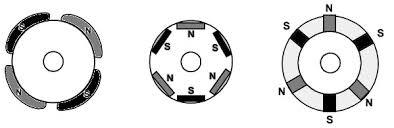
How Do Brushless DC Motors Work?
To understand how brushless DC motors operate, it is important to examine their internal structure and control method.
Main Components of Brushless DC Motors
Permanent magnet rotor
Stator with multi-phase windings
Electronic controller (driver or ESC)
Instead of brushes, the electronic controller energizes the stator windings in a precise sequence. Rotor position is detected using Hall sensors or sensorless algorithms, allowing the controller to generate a rotating magnetic field that smoothly drives the rotor.
This electronic commutation method is the key reason brushless DC motors achieve high efficiency and stable motion.
Key Advantages of Brushless DC Motors
High Efficiency
Brushless DC motors typically achieve efficiency levels above 85–90% due to the absence of brush friction and reduced electrical losses.
Long Service Life
Without brushes to wear out, brushless DC motors offer significantly longer operational lifespans and reduced maintenance costs.
Precise Speed and Torque Control
Advanced motor controllers enable accurate speed, torque, and position control, even at low speeds.
Low Noise and Reduced EMI
Brushless designs minimize mechanical noise and electromagnetic interference, which is essential for medical and laboratory environments.
High Power Density
Brushless DC motors deliver high torque in a compact size, enabling space-saving system designs.
Types of Brushless DC Motors
Inner Rotor Brushless DC Motors
Inner rotor motors feature a rotor located inside the stator. They are capable of high-speed operation and are commonly used in fans, pumps, and compact devices.
Outer Rotor Brushless DC Motors
Outer rotor motors provide higher torque at lower speeds and are widely used in robotics and automation systems.
Sensored vs Sensorless Brushless DC Motors
Sensored BLDC motors use Hall sensors for accurate low-speed control
Sensorless BLDC motors rely on back-EMF detection and offer simpler system design
Applications of Brushless DC Motors
Industrial Automation
Brushless DC motors are widely used in conveyors, AGVs, packaging machines, and precision positioning equipment.
Robotics
Robotic joints, collaborative robots, and mobile robots benefit from the smooth motion and high torque control of brushless DC motors.
Medical Equipment
Medical devices such as ventilators, infusion pumps, and diagnostic equipment require low noise, high reliability, and precise control—ideal conditions for brushless DC motors.
Electric Vehicles and Mobility
E-bikes, electric scooters, and EV auxiliary systems rely on brushless DC motors for efficiency and durability.
HVAC and Energy Systems
Fans, compressors, and pumps use brushless DC motors to reduce energy consumption and meet modern efficiency standards.
Brushless DC Motors vs Brushed DC Motors
| Feature | Brushless DC Motors | Brushed DC Motors |
|---|---|---|
| Commutation | Electronic | Mechanical brushes |
| Efficiency | High | Lower |
| Maintenance | Minimal | Frequent |
| Noise | Low | Higher |
| Service Life | Long | Shorter |
How to Choose the Right Brushless DC Motor
Required torque and speed range
Load characteristics and duty cycle
Sensored or sensorless control
Power supply voltage
Environmental conditions
Incorrect motor selection can lead to overheating, noise, or reduced system life.
Why Choose HDBMOTOR for Brushless DC Motors?
HDBMOTOR specializes in the design and manufacturing of high-performance brushless DC motors for industrial and OEM applications. We support customers with:
Custom brushless DC motor development
Torque and speed optimization
Driver and controller matching
Stable mass production and long-term supply
If you are upgrading from brushed motors or developing a new product, our engineering team can help you select or customize the right brushless DC motor solution.
Contact HDBMOTOR today to discuss your application requirements and receive professional technical support.
Conclusion
Brushless DC motors have become an essential component in modern motion control systems due to their efficiency, durability, and precise control capabilities. Understanding how brushless DC motors work and where they are best applied helps engineers make informed decisions and improve system performance.
For professional motor selection advice or custom solutions, partnering with an experienced manufacturer like HDBMOTOR ensures long-term reliability and success.
Recommended Articles:
Do Stepper Motors Get Hot? 7 Powerful Causes and Solutions
Stepper Motor Continuous Jitter When Returning to Origin: 7 Common