
 Deutsch
 한국어
한국어
If you're sourcing stepper motors for a production machine, robotics platform, or automated system, chances are an off-the-shelf motor won't fit every requirement cleanly.
Sometimes the issue isn't torque at all. It's space.
The shaft is too short. The connector exits in the wrong direction. The rated winding doesn't match the controller bus voltage. We've seen all of these problems during OEM integration projects, especially once a machine moves from prototype stage into production.
HDBMotor manufactures custom stepper motors for OEM customers in CNC systems, robotics, medical devices, semiconductor equipment, and industrial automation applications. Customization work is handled in-house — including winding adjustment, shaft machining, connector assembly, encoder integration, and mechanical modification.
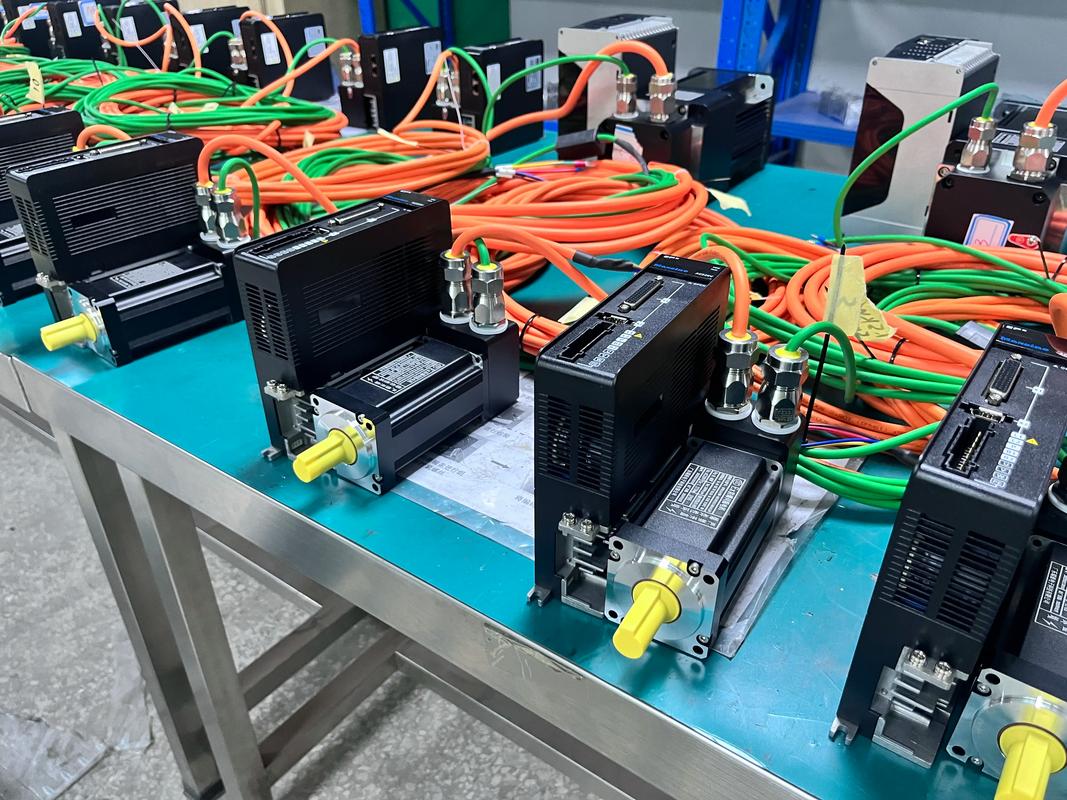
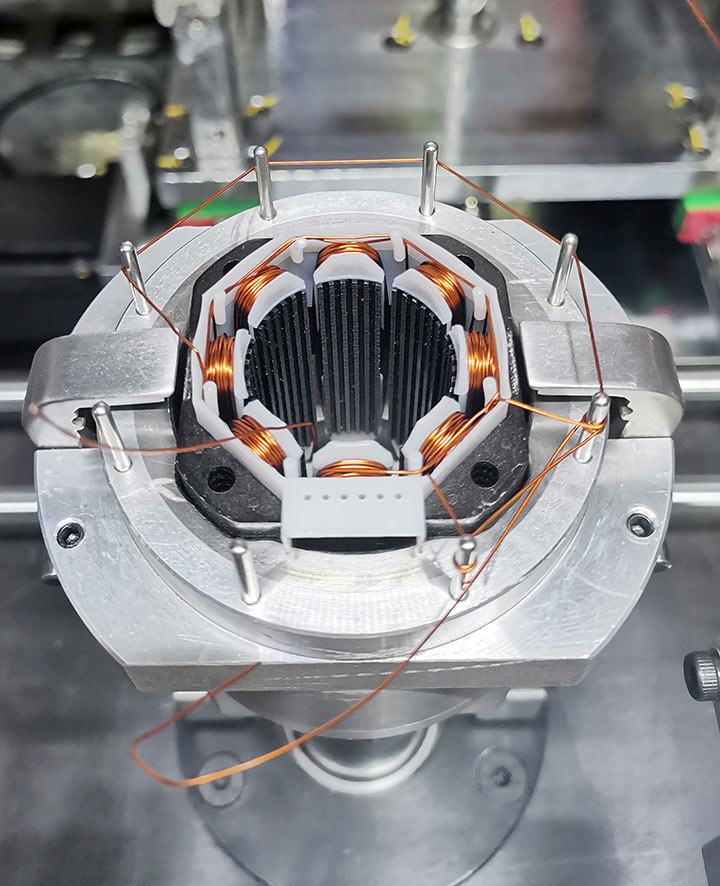
What We Can Customize
Custom winding voltage: Low-voltage and high-voltage winding configurations matched to your driver and bus voltage
Shaft modification: Diameter, shaft length, keyway, D-flat, threaded shaft, dual-shaft configuration
Connector and cable: JST, Molex, Amphenol, flying leads, radial exit, custom harness assembly
Encoder integration: Incremental and absolute encoder options for closed-loop stepper systems
NEMA frame sizes: NEMA 8, 11, 14, 17, 23, 34 and selected larger-frame configurations
Mechanical modifications: Mounting flange adjustment, sealing, pilot diameter changes, IP-rated configurations
OEM Program Overview
Sample lead time: 15–25 working days
Production lead time: 30–45 working days after approval
MOQ: Typically 50–200 units depending on customization scope
Certifications: CE and RoHS
Export markets: North America, Europe, South Korea, Southeast Asia, Middle East
Why OEM Projects Usually Require Custom Stepper Motors
Catalog motors are designed around general-purpose applications. That works during early prototyping. Production machines are different.
Voltage mismatch is one of the most common problems. A standard motor winding designed around a low-voltage chopper driver may not perform correctly on a 48V or 72V system bus. In some projects, the motor runs hotter than expected. In others, torque drops too aggressively at higher RPM because the winding inductance is not optimized for the actual driver topology.
Mechanical integration creates another set of issues.
A shaft extension that looks insignificant on a CAD drawing can become critical once the coupling, pulley, or encoder assembly is installed. We've seen projects delayed simply because the connector housing collided with an enclosure wall after final assembly.
Connector compatibility also becomes a production problem very quickly. If the motor ships with bare leads but your assembly line uses pre-terminated JST harnesses, someone ends up manually soldering cables during production. That may work for 10 units. It does not work for 10,000.
Some OEM applications also require environmental protection. Packaging equipment near washdown zones. Outdoor solar tracking systems. Medical equipment exposed to sterilization environments. Standard IP40 motors are rarely designed for those conditions without modification.

OEM Customization Capabilities
Custom Winding Voltage
Winding voltage is often misunderstood during sourcing discussions.
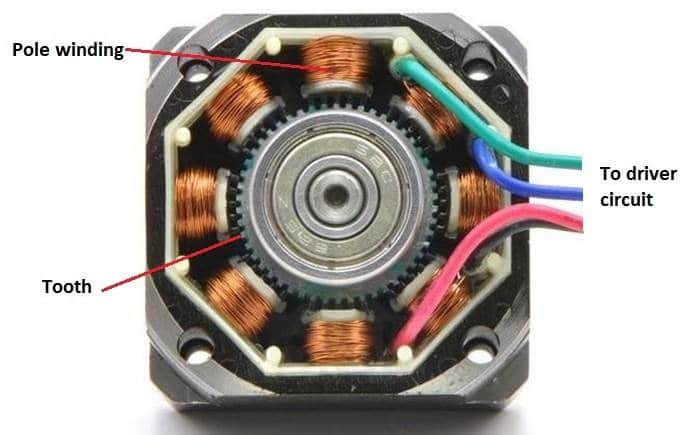
The rated voltage shown on a motor datasheet is not the actual system supply voltage. What matters is how winding resistance and inductance interact with your driver bus voltage, switching frequency, acceleration profile, and thermal limits.
Higher voltage winding options generally use higher resistance and inductance values. These configurations are commonly paired with 48V or 72V systems where smoother current control and reduced high-speed torque drop are important.
Lower inductance windings are usually preferred in high-speed positioning systems where rapid current rise matters more than holding torque.
Some applications only need minor winding adjustment. Others require a completely different winding architecture. It depends on the driver, duty cycle, and thermal envelope.
Custom winding projects may require additional setup time for bobbin tooling, wire gauge validation, and burn-in testing.
Shaft and Shaft Length Customization
Simple shaft modifications such as D-flats and keyways are relatively straightforward. Fully custom shaft dimensions are more involved because bearing load, shaft rigidity, and rotational balance all need evaluation.
Longer shaft extensions can introduce resonance issues at higher rotational speeds. Dual-shaft configurations may affect bearing loading depending on the encoder or pulley mounted at the rear side.
Some projects require stainless steel shafts for corrosion resistance. Others require hard chrome or black oxide treatment depending on the operating environment.
We usually review shaft drawings together with coupling and gearbox information before final confirmation.
Connector and Cable Customization
Connector selection affects installation speed more than most buyers expect.
Factory-installed connectors reduce assembly time, minimize wiring mistakes, and improve long-term reliability. We support JST, Molex, Amphenol, and customer-specified connector families.
Exit direction also matters. Radial cable exit, axial exit, and clock-position orientation should all be specified early in the project. Once enclosure dimensions are frozen, changing cable direction becomes expensive.
For applications exposed to heat, oil, or cleaning chemicals, silicone and PTFE cable jackets are available.
Encoder Integration
Encoder-integrated stepper motors are commonly used in closed-loop positioning systems where stall detection and position correction are important.
Encoder integration usually requires a rear shaft extension and additional housing space. This increases overall motor length, typically by 20–35mm depending on encoder resolution and line driver configuration.
Incremental encoders from 100–10,000 PPR are available. For most industrial automation systems, 500–1000 PPR is sufficient.
Very high encoder resolutions improve feedback precision but also increase signal frequency and shielding requirements. In long cable installations, this becomes important.
Absolute encoder configurations are available on selected NEMA 23 and NEMA 34 platforms.
NEMA Frame and Stack Length Customization
Frame size determines the physical footprint of the motor. Stack length determines torque output.
Longer stack lengths provide higher holding torque but also increase weight, inertia, and heat generation. In compact robotic joints or moving-axis systems, that trade-off matters.
For NEMA 23 stepper motors, custom stack lengths are available for applications ranging from compact positioning systems to higher torque automation assemblies.
Closed-loop stepper motor systems are also available for applications requiring encoder feedback and improved position stability.
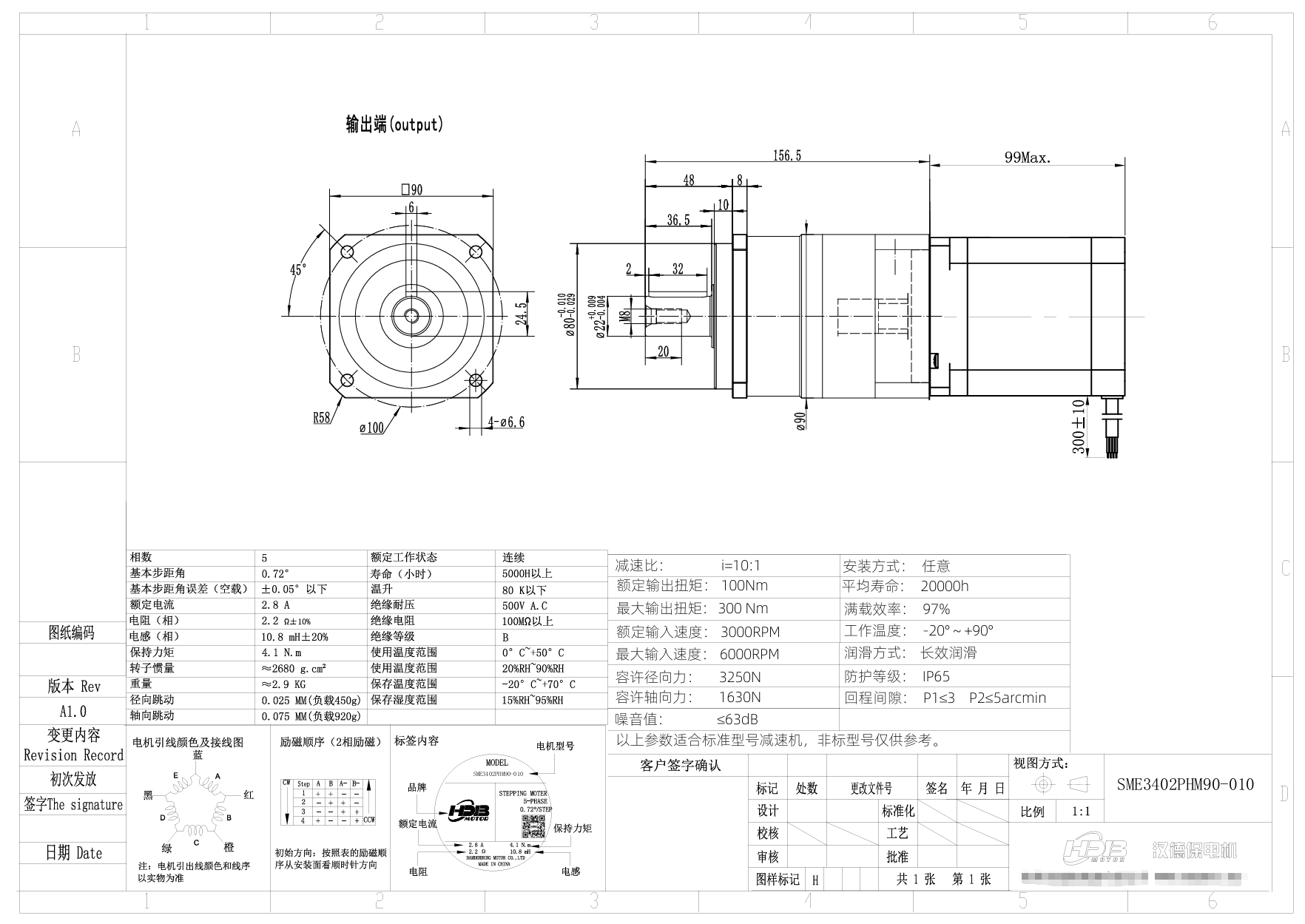
For projects involving higher torque transmission, we also support planetary gearbox integration depending on frame size and output requirements.
Custom OEM Stepper Motor Technical Specification Range
| Parameter | Standard Range | Notes |
|---|---|---|
| Frame Sizes | NEMA 8, 11, 14, 17, 23, 34 | NEMA 42 available on inquiry |
| Step Angle | 0.9° / 1.8° | 0.9° available on selected frame sizes |
| Winding Voltage | 2V – 60V+ | Matched to driver specification |
| Phase Current | 0.4A – 8.0A | Depends on frame size and thermal limits |
| Winding Configuration | Bipolar series / parallel / unipolar | 8-wire configurations available |
| Shaft Diameter | 3mm – 19.05mm | Custom machining available |
| Shaft Options | D-flat, keyway, threaded, dual-shaft | Hollow shaft on selected platforms |
| Encoder Options | 100–10,000 PPR incremental | Absolute encoder available on inquiry |
| IP Rating | IP40 / IP54 / IP65 | Depends on sealing configuration |
| Connector Options | JST, Molex, Amphenol, flying leads | Custom harness available |
| Insulation Class | Class B / Class F | Class F recommended for high duty cycle |
| Operating Temperature | -20°C to +50°C ambient | Thermal derating above 40°C |
| Certifications | CE / RoHS | Additional documentation available on request |
| MOQ | 50–200 units | Depends on customization scope |
OEM Engineering and Production Process
Custom motor projects usually involve direct engineering discussion rather than simple catalog ordering.
Step 1 — RFQ Review
We review your application requirements, driver voltage, torque target, shaft details, connector specification, and installation constraints.
Step 2 — Engineering Evaluation
Our engineering team evaluates winding compatibility, mechanical feasibility, and tooling requirements before quotation confirmation.
Step 3 — Prototype Production
Prototype lead time typically ranges from 15–25 working days depending on the level of modification required.
Step 4 — Customer Validation
The sample motor is tested in your actual application environment. Adjustments are discussed if necessary.
Step 5 — Mass Production
Production lead time generally falls within 30–45 working days after sample approval.
Step 6 — QC and Shipment
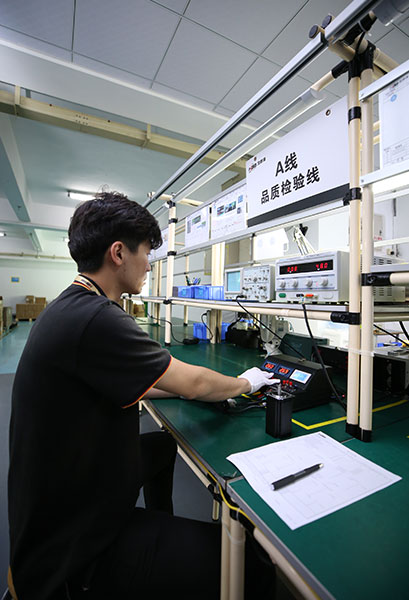
Outgoing inspection includes winding resistance testing, dimensional inspection, insulation testing, and electrical verification.
Example OEM Customization Projects
Packaging Equipment OEM — Germany
Custom NEMA 23 configuration with 48V winding, radial cable exit, and IP54 sealing for high-duty indexing equipment.
Medical Pump Manufacturer — South Korea
NEMA 17 dual-shaft motor with 1000 PPR encoder and reduced temperature-rise winding design.
Solar Tracking Integrator — Middle East
NEMA 34 high-torque motor with corrosion-resistant shaft treatment and extended outdoor-rated cable harness.
Manufacturing Capability and Quality Control
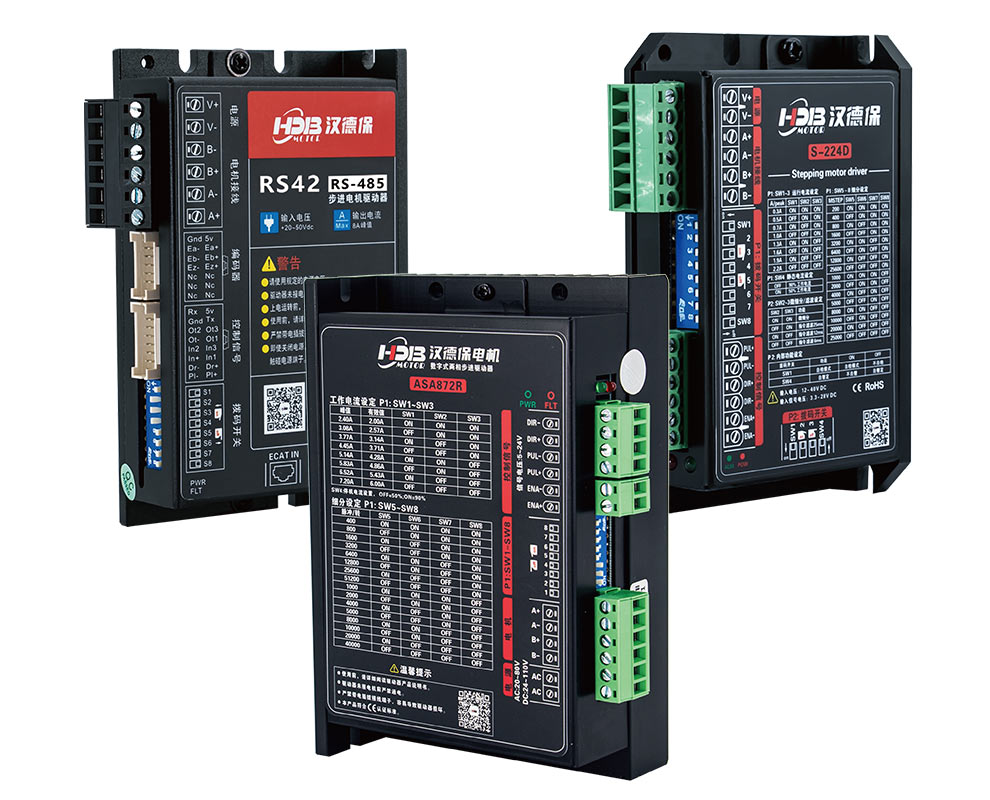
HDBMotor manufactures stepper motors, BLDC motors, planetary gearboxes, and motor drivers for industrial OEM customers worldwide.
Our engineering team handles winding evaluation, mechanical review, and driver compatibility internally. OEM projects are not outsourced to trading intermediaries.
Production and inspection procedures follow structured industrial manufacturing workflows with dimensional inspection, electrical testing, and outgoing QC verification.
For customers with supplier qualification requirements, we can provide process documentation, inspection records, and production traceability information during qualification review.
Quality and Testing
100% winding resistance verification
Insulation resistance and dielectric withstand testing
Back-EMF symmetry verification
Dimensional inspection on critical features
Burn-in testing available for selected applications
Supported Markets
North America
Germany and wider European market
South Korea and Japan
India and Southeast Asia
Middle East industrial automation sector
Industries and OEM Applications
CNC Machinery
Axis drives, positioning stages, router systems, plasma cutting equipment.
Industrial Robotics
Joint actuators, indexing systems, conveyor positioning, collaborative robot auxiliary axes.
Medical Equipment
Fluid dispensing systems, syringe pumps, laboratory automation platforms.
Packaging Equipment
Labeling systems, conveyor indexing, fill-and-seal machinery.
Semiconductor Equipment
Wafer handling systems, precision positioning stages, cleanroom-compatible automation equipment.
Solar Tracking Systems
Outdoor positioning drives with IP-rated sealing and low-speed torque optimization.
Common OEM Design Problems We Often See
One issue we frequently encounter is customers selecting winding voltage based purely on the rated voltage printed on the datasheet.
In reality, the driver bus voltage and current regulation method matter much more than the nominal winding voltage itself.
Another common issue is insufficient clearance around rear-mounted encoder assemblies...
OEM Procurement FAQ
What information is needed for a custom RFQ?
Frame size, torque target, driver voltage, shaft configuration, connector specification, and estimated annual volume are usually enough to begin evaluation.
What is the minimum order quantity?
Most OEM customization projects start from 50–200 units depending on winding and tooling requirements.
Can you match another manufacturer's motor?
In many cases yes, provided a sample motor or technical drawing is available for analysis.
Do you support private label branding?
Yes. Custom labels, laser marking, and OEM packaging are available.
Can you support blanket orders?
Yes. Scheduled release programs can be discussed for long-term OEM customers.
Discuss Your OEM Motor Project
If catalog motors are creating integration problems in your project, send us the details.
Include your application brief, target specification, estimated annual volume, and any existing drawings or motor samples if available.
Our engineering team reviews every inquiry before quotation.